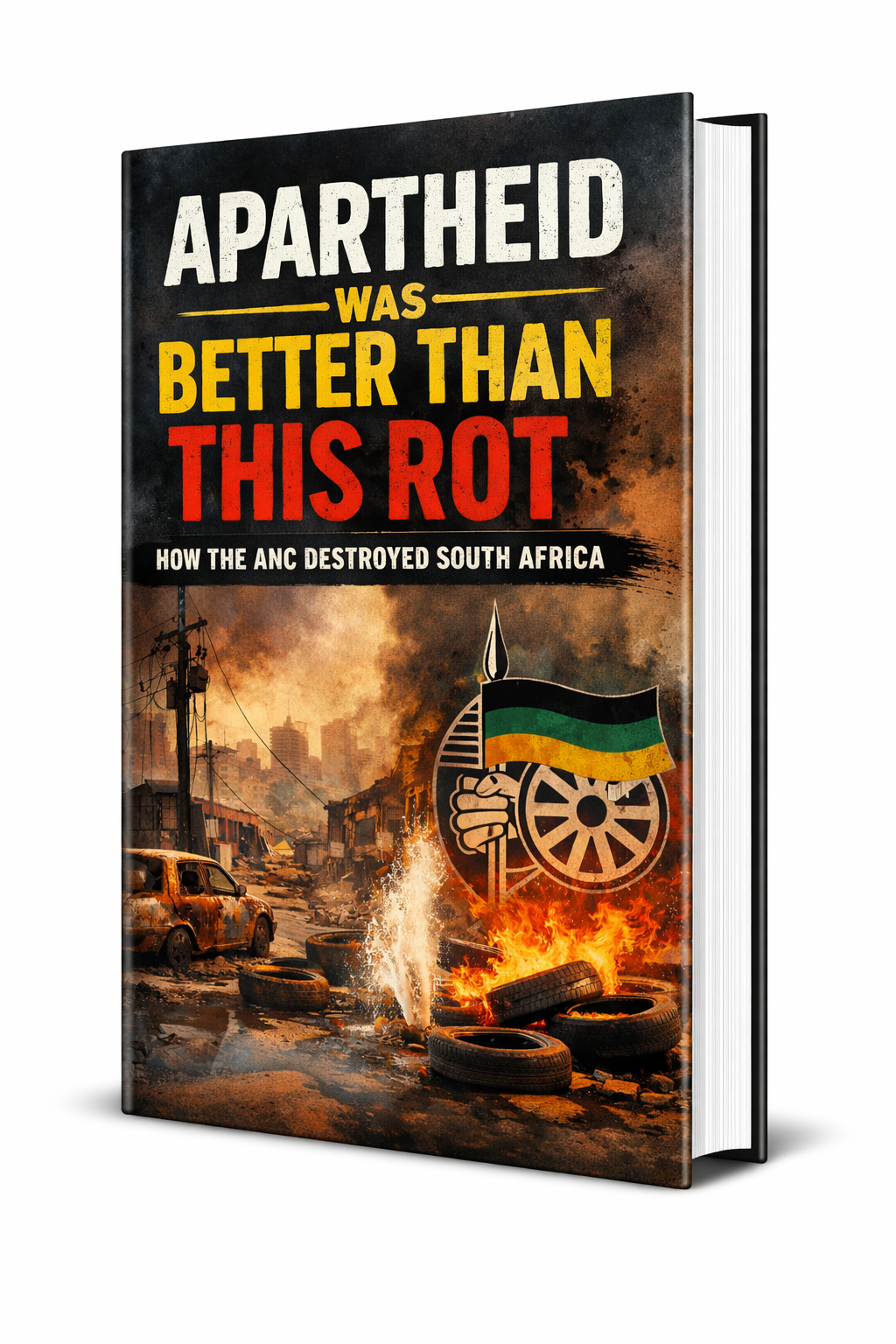

This is not a nostalgic book. This is not a reconciliation book. This is not a polite book.
This is a book written from inside collapse.
South Africa is rotting in plain sight. Not symbolically. Not theoretically. Rot you can smell in broken sewage systems, feel in empty taps, hear in gunshots at night, and live through in unemployment lines, failing schools, collapsing universities, and government corridors that have become killing fields.
This book begins where slogans end.
It begins with a forbidden sentence that millions think but are trained not to say aloud: apartheid was better than this.
Not because apartheid was just. Not because apartheid was humane. But because life, for many ordinary people, worked better than it does now.
This book takes that sentence seriously instead of hysterically. It treats it not as heresy, but as testimony. It asks the question South Africa has tried desperately to silence:
How did a morally condemned system manage to deliver basic functionality, while a morally celebrated liberation project produced mass insecurity, decay, and collapse.
This is a book about outcomes, not intentions. About governance, not mythology. About responsibility, not grievance.
For three decades, South Africans have been told to be patient. Told to remember the past. Told that failure is understandable. Told that collapse is complex. Told that criticism is betrayal. Told that memory itself is immoral.
Meanwhile, the country has burned.
Murder rates among the highest in the world. Crime normalized into daily survival strategy. Youth unemployment calcified into generational despair. Township schools reduced to warehouses for broken futures. Universities hollowed out by governance failure and political patronage. Infrastructure stripped, vandalized, looted, and abandoned. Water systems collapsing in villages and suburbs alike. Electricity rationed like a privilege. Municipalities in permanent crisis. Whistleblowers assassinated. Tender disputes resolved with bullets.
And through it all, endless speeches.
This book is hostile to excuses.
It demolishes the lazy lie that says “it was built for the few, now everyone uses it, so of course it collapsed.” It exposes that argument for what it is: an admission of incompetence masquerading as moral insight. Infrastructure does not fail because more people use it. It fails because it is not maintained, expanded, planned for, or governed.
That is not history’s fault. That is this government’s fault.
This book also refuses the moral blackmail that says acknowledging apartheid’s wrongs entitles the present to permanent indulgence. Yes, apartheid was wrong. That truth does not grant anyone a lifetime license to destroy a country. Suffering explains where you come from. It does not excuse what you fail to build.
Every civilization that escaped poverty did so by reclaiming responsibility, enforcing standards, and governing seriously. None were nursed forever. None were exempt from consequence. None advanced by endlessly reciting their wounds.
This book insists on that standard.
It defends the right to compare eras. It defends nostalgia as education. It defends memory as a weapon against enforced amnesia. It argues that banning comparison is the behavior of fragile regimes terrified of judgment.
A confident government does not fear memory. A functioning state does not silence comparison. Only failure does.
Apartheid Was Better Than This Rot is written for readers who refuse to be gaslit by narratives that deny their lived experience. It is written for those who remember taps that worked, institutions that enforced standards, schools that taught, and a state that at least functioned, even under injustice.
It is written for those who are tired of being told to lower expectations in the name of history. Tired of being shamed for noticing collapse. Tired of slogans replacing water. Tired of speeches replacing safety. Tired of liberation language used to excuse destruction.
This book does not ask you to love the past. It asks you to stop lying about the present.
It names names. It names systems. It names failure.
It argues, relentlessly, that the ANC did not merely inherit a difficult history. It inherited a functioning state and dismantled it through misrule, politicization, corruption, strategic emptiness, and the systematic erosion of accountability.
This is not an academic exercise. It is a reckoning.
If you believe that moral victory excuses collapse, this book will offend you. If you believe that suffering grants permanent exemption from competence, this book will anger you. If you believe comparison is betrayal, this book will unsettle you.
But if you believe that governance matters, that standards matter, that memory matters, and that no society survives on slogans alone, then this book will feel like someone finally saying what has been unsayable for too long.
South Africa does not need more speeches. It needs honesty.
This book delivers it—without apology.
