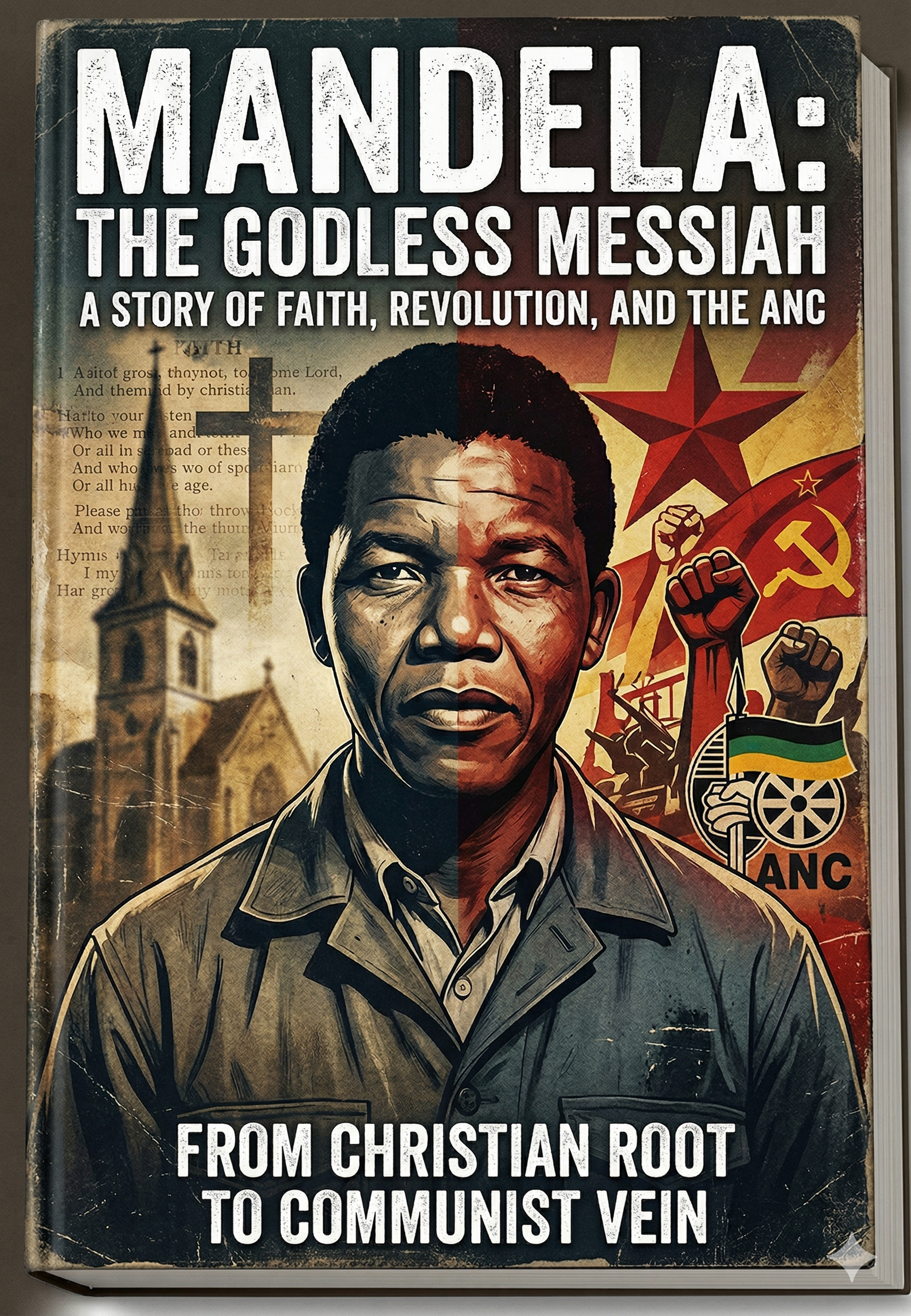
This is a fascinating narrative angle. To set the stage, the African National Congress (ANC) was indeed founded with deep religious underpinnings—men like John Dube were ordained ministers, and meetings often felt like church services. The shift toward a secular, Marxist-Leninist influence during the mid-20th century creates a powerful backdrop for a "Messiah" figure who trades the pulpit for the manifesto.
Here is a story exploring that transformation.
The Godless Messiah
The dust of the Witwatersrand didn’t just clog the lungs of the miners; it settled over the soul of the old guard.
In the 1940s, the ANC was a house of hymns. The leaders wore Sunday suits and spoke of "divine justice." But in the smoke-filled backrooms of Johannesburg, a different kind of fire was being stoked. Nelson—tall, regal, and possessed of a voice that sounded like shifting tectonic plates—didn't arrive with a Bible. He arrived with a stopwatch and a fist.
The Great Secularization
The transition wasn't a sudden break, but a slow, rhythmic replacement of symbols.
The Altar to the Factory Floor: Where the elders quoted Exodus, the young lions began quoting The Communist Manifesto.
Providence to Dialectics: They stopped waiting for God to move the hearts of the oppressors and started believing in the inevitable gears of historical materialism.
Mandela was the bridge. He wasn't "godless" in the sense of a void; he was filled with a new religion—the religion of the State and the masses. He moved through the crowds not as a preacher seeking souls, but as a commander organizing bodies.
The Iconoclast
The "Godless Messiah" appeared at the exact moment the incense of the old ANC was fading. The elders watched in a mix of awe and terror as this young lawyer bypassed the traditional petitions to the Crown and the Creator.
"We are our own liberators," he would say, his shadow lengthening across the township walls. "The heavens are silent, so the Earth must speak."
As the South African Communist Party began to weave its red threads into the green and gold of the ANC, the language changed. "Sin" became "Exploitation." "Salvation" became "Revolution." The messianic aura remained, but the source of the light had shifted from the sun above to the red star on the horizon.
The Transformation
By the time the Rivonia Trial began, the transformation was complete. Mandela stood in the dock—not as a martyr for a deity, but as a symbol of a collective will. He was a man who had realized that in a land of systemic darkness, a "Godless Messiah" was more dangerous to the regime than a thousand saints. He didn't offer a kingdom in the next life; he demanded a republic in this one.
This historical "pivot" is a heavy theme to unpack. Would you like me to dive deeper into the specific friction between the ANC Youth League and the traditionalist elders during this era?
